
A few days ago, Bricklin had a moment.
Seven SV-1s crossed the block at Mecum Glendale, and for once, the quirky Canadian-built, gullwing-doored safety car was not just a cult curiosity. It was a live auction story. Mecum’s group of seven produced sale prices ranging from $28,600 to $47,300, with the three 1975 cars bringing $47,300, $29,700, and $28,600. That was enough to make even hardened skeptics wonder if the Bricklin had finally found a firmer foothold in the market.
Now comes the reality check.
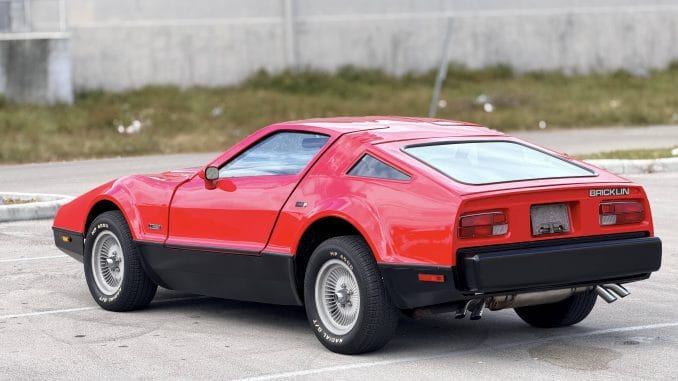
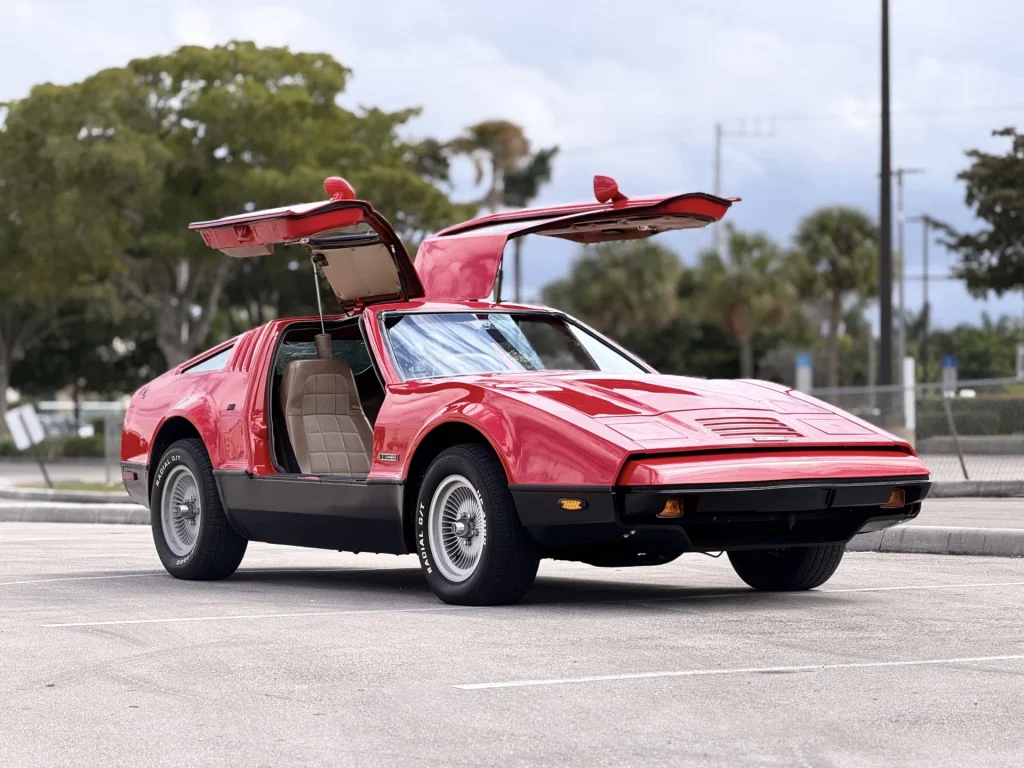
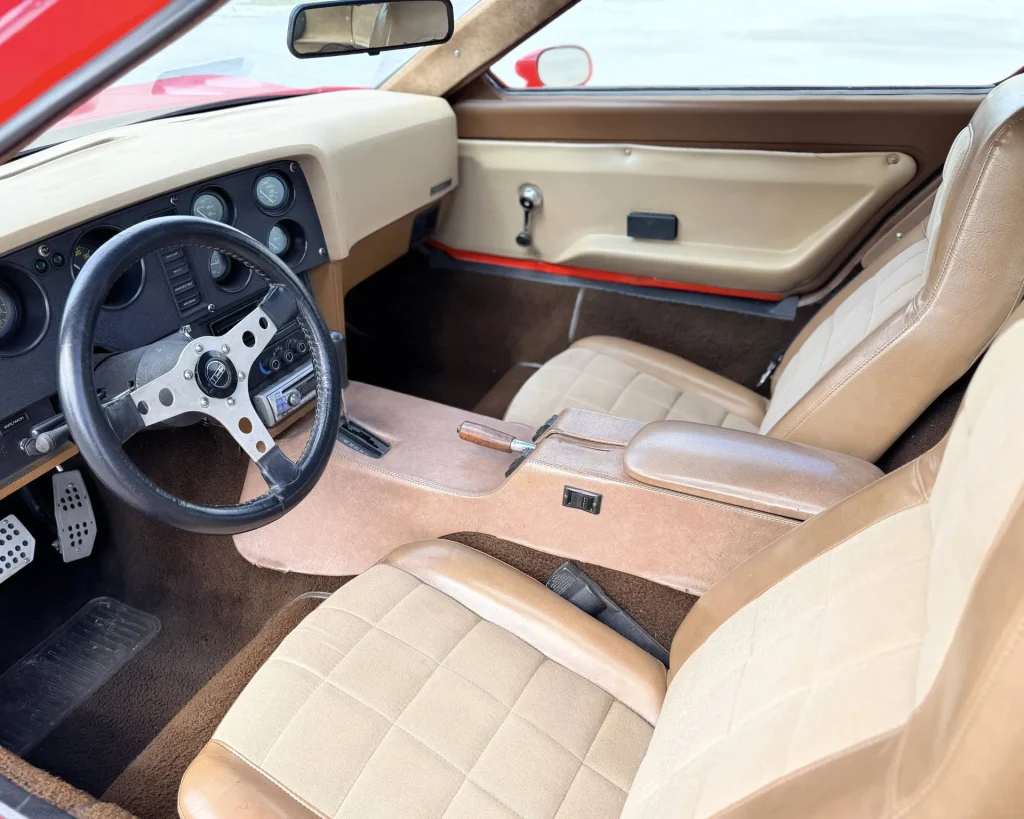
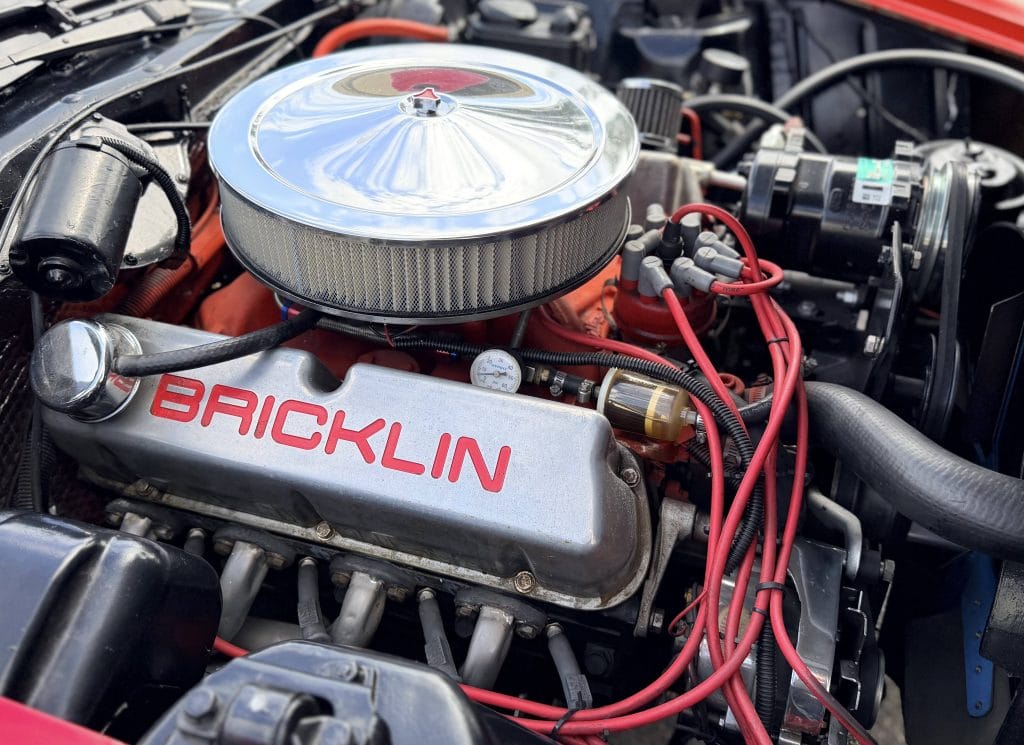
A 1975 Bricklin SV-1 in Safety Red from Boca Raton, Florida, is currently listed on Hemmings as a reserve auction car. Hemmings identifies it as one of approximately 2,100 produced for 1975, equipped with a 351-cu.in. V-8, automatic transmission. Offered with a stated 50,270 miles, it possesses a composite body whose molded-in-color finish is believed original. The listing also describes the interior as being in very good condition.
At the time this article was written (just before 8:00 p.m. Eastern on Monday, March 23, 2026), bidding has reached USD $25,000 with the reserve unmet. The online auction is scheduled to close on Wednesday, March 25, 2026, at 4:00 p.m. Eastern.
This Hemmings Bricklin appears to be a much more typical SV-1 than the strongest Mecum Glendale cars that just sold. It is not a near-time-capsule example with three-digit mileage. It is not a benchmark preservation piece. And it is not completely untouched. Hemmings notes a number of aftermarket engine upgrades, including an Edelbrock intake manifold, Holley dual-feed four-barrel carburetor, headers, custom dual exhaust, aftermarket ignition components, and a replacement radio. The transmission is described as believed to be the original Ford-supplied FMX three-speed automatic.
That matters because Mecum’s Bricklin moment was not just about Bricklins. It was about very specific Bricklins.
The Glendale group leaned on scarcity, low mileage, no-reserve selling, and preservation appeal. One 1974 four-speed car sold for $44,000. Another 1974 brought $37,400. Even the two 1976 cars, with 972 miles and 80 miles respectively, sold for $29,150 and $29,700. Those numbers did not prove that every Bricklin is suddenly expensive. They proved that standout Bricklins can get attention when the setting is right.
The Hemmings car is different. And frankly, that is why it is interesting. And arguably better, notwithstanding its reasonable mileage.
This looks more like the Bricklin most people might actually encounter in the wild: a visually distinctive, mostly original, somewhat and desirably updated, enthusiast-owned survivor rather than a museum-piece oddity. In that sense, it may be a more useful test of the actual market than Glendale’s concentrated seven-car spectacle.
Sales data found on Classic.com helps sharpen that point. The site currently lists the average Bricklin SV-1 sale price at $30,666, with a recorded high of $101,000 and a low of $7,500. It also shows a recent $21,000 sale for a 1975 SV-1 in December 2025 and a $14,500 no-sale for another 1975 example later that same month. In other words, the broader market still contains plenty of evidence that a driver-grade or more ordinary SV-1 is not automatically a $40,000-plus car just because a few better examples recently got there.
That is where the “Great Buy…Maybe?” angle comes in.
If this Hemmings Bricklin really is stalling in the mid-$20,000 range, it may be light relative to the Glendale headlines, but it does not look irrational relative to the broader market data. In fact, it may be one of those cases where the market is doing exactly what mature markets are supposed to do: separating the exceptional from the merely interesting.
And that may actually be good news, depending on what side of the trade you might occupy.
The Bricklin SV-1 has spent decades living in a strange limbo — too unusual to ignore, too quirky to fully mainstream, and too often dismissed as a footnote in automotive history. But markets become healthier when they start rewarding the right things in the right order. Low-mile, especially original, highly preserved examples should command stronger money. More used, lightly modified, driver-oriented cars should trade at more restrained levels. That is not weakness. That is definition.
So is this Safety Red 1975 Bricklin a great buy?
Short answer…maybe…
If the reserve is set ambitiously, the seller may simply be discovering that Mecum Glendale did not magically reset the entire Bricklin universe in one weekend. If the bidding remains below where the seller hoped, that may frustrate the consignor, but it also may offer exactly the kind of selective buying opportunity that smart niche collectors look for. A more usable Bricklin at a more grounded number is not the same thing as a weak Bricklin. It may just be the market reminding everyone that headlines and reality are rarely the same thing.
Wednesday afternoon will tell the tale…
David Neyens has worked in collector car sales and auctions for 18 years, writing thousands of detailed vehicle descriptions and helping his clients navigate the market successfully. His expertise has helped clients earn millions through informed market participation. Motorcopia provides the analytical perspective serious collectors need to understand not just cars, but how the market actually functions. Motorcopia delivers the insider intelligence you won’t find anywhere else.
www.motorcopia.com
Subscribe to the free Motorcopia Newsletter today!

Leave a Reply