
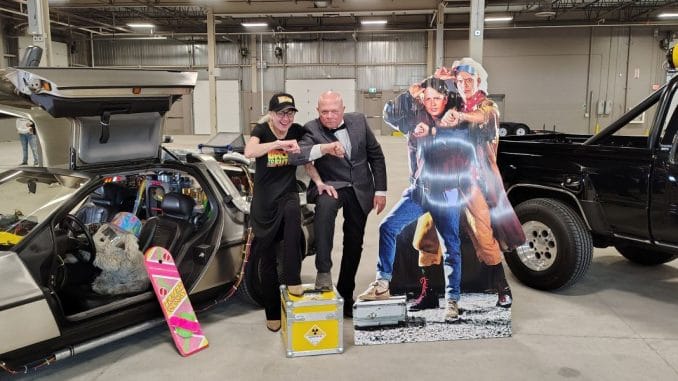
If ever there was an automotive executive capable of taking on the established players at their own game, engineer and eventual maverick GM division chief John Z. Delorean was that person. Following stints at Chrysler and then Packard, Delorean was offered the opportunity to join his choice of five General Motors divisions in the wake of Packard’s ill-fated 1954 merger with Studebaker. Choosing Pontiac, which was headed by Semon E. `Bunkie’ Knudsen with the mandate to “fix or kill” the foundering marque, Delorean began there as an assistant to both chief engineer Pete Estes and Knudsen. Together, the men did indeed turn around Pontiac, resulting in the landmark “Wide Track” 1959 Pontiac model line and a carefully cultivated performance image that included the Catalina, Bonneville, Grand Prix, 2+2, GTO, and Firebird. Named the head of Pontiac in 1965, Delorean was a driving force in Pontiac’s hold on its 3rd place market share in American sales rankings through most of the 1960s.
In 1970, Delorean was named division head of Chevrolet, and he quickly turned the troubled GM division around. In 1972, he rose to Vice-President of GM’s entire car and truck production, but grew increasingly tired of corporate politics and left the giant in 1973. Delorean quickly set up his own company, named the Delorean Motor Company, and a prototype two-seat sports car called the “Delorean Safety Vehicle” was unveiled.
Styled by famed designer Giorgetto Giugiaro of Italdesign and featuring brushed stainless-steel body panels, gullwing-style doors, a PRV (Peugeot, Renault, and Volvo) V-6 engine, and rear transaxle, the car was named the DMC-12 with new manufacturing facilities established in Dunmurry, Northern Ireland. Massive financial incentives were provided by the Northern Ireland Development Agency and Margaret Thatcher’s UK government. Formula 1 World Champion constructor Colin Chapman of Lotus fame was engaged to provide his considerable engineering and development expertise. Despite delays and skittish investors, Delorean production commenced in early 1981, and over the next 21 months, approximately 9,000 DMC-12s were built.
In addition to the movie-worthy story of its development, road to production, and the company’s unfortunate demise, the Delorean’s prominent, and more likely, starring role in the smash hit 1985 movie Back to the Future assured the DMC-12’s lasting place in popular culture. Today, it remains an unqualified icon that continues to fascinate all who experience it, whether on a movie screen or in physical reality.
Among the movie’s truest superfans is a nearby resident named Owen, whom I met with his parents, Mike and Karen, at the excellent Driven custom car show that stopped into London, Ontario’s Western Fairgrounds on May 9th. Owen has been a huge fan of the movie since his first viewing at age 7, and he vowed to one day own a Delorean just like the movie car. In fact, that dream was eventually realized, with Owen devising and installing most of the movie props on his DMC-12, including his close replica of Dr. Emmett Brown’s Flux Capacitor, essential for time travel. Mom Karen and Dad Mike were part of the fun from the beginning, and the family brought joy to the Driven show’s visitors and for me, meeting them was the highlight of the event. In addition to the Delorean Time Machine, their display included movie memorabilia and even a highly authentic replica of the 1985 Toyota 4×4 pickup prized by Marty McFly, as portrayed by beloved actor Michael J. Fox.
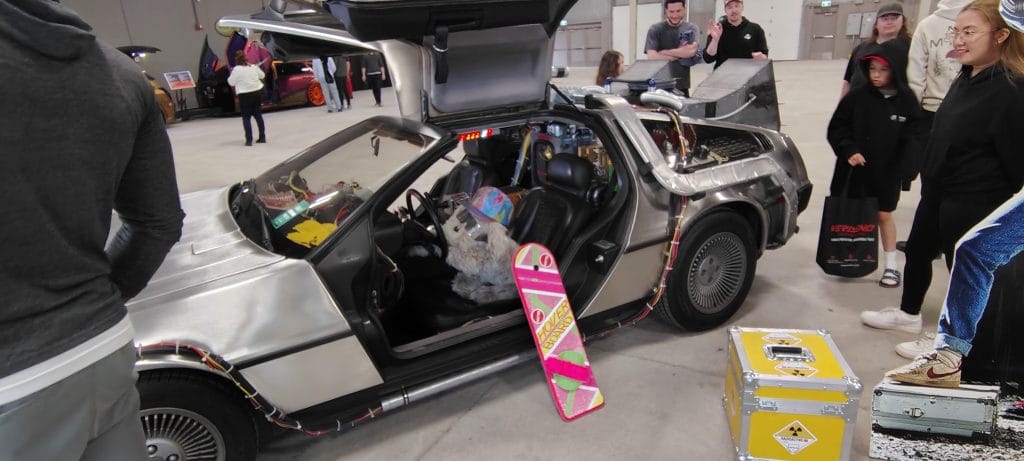
Meeting Mike, Karen, and Owen was an honor, and it was the highlight of the show for me and many others in attendance. The vehicles and family are all about sharing the experience with new generations of fans of the iconic movie. In fact, they are available to make your next party or function unforgettable, including birthdays, weddings, Retro-themed parties/gatherings, corporate events, and on occasion, time continuum alterations! There’s so much more to the story, but for now, follow them on Instagram @funclebrown.

David C.R. Neyens has worked in collector car sales and auctions for 18 years, writing thousands of detailed vehicle descriptions and helping his clients navigate the market successfully. His expertise has helped clients earn millions through informed market participation. Motorcopia provides the analytical perspective serious collectors need to understand not just cars, but how the market actually functions. Motorcopia delivers the insider intelligence you won’t find anywhere else.
www.motorcopia.com
Subscribe to the free Motorcopia Newsletter today!
If you have a special vehicle and need to sell, contact David at admin@motorcopia.com to discuss your needs and how he can help you to go from 0 to SOLD today!
Leave a Reply