
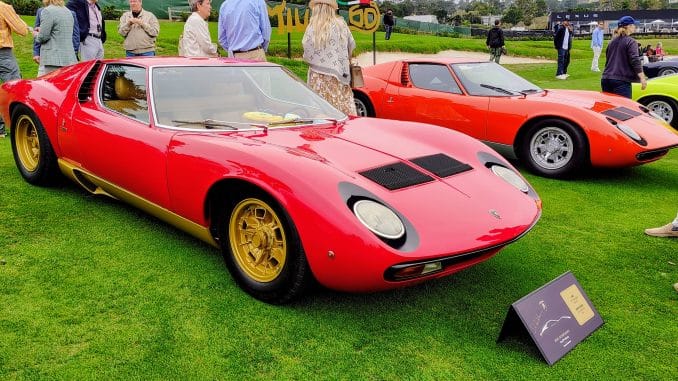
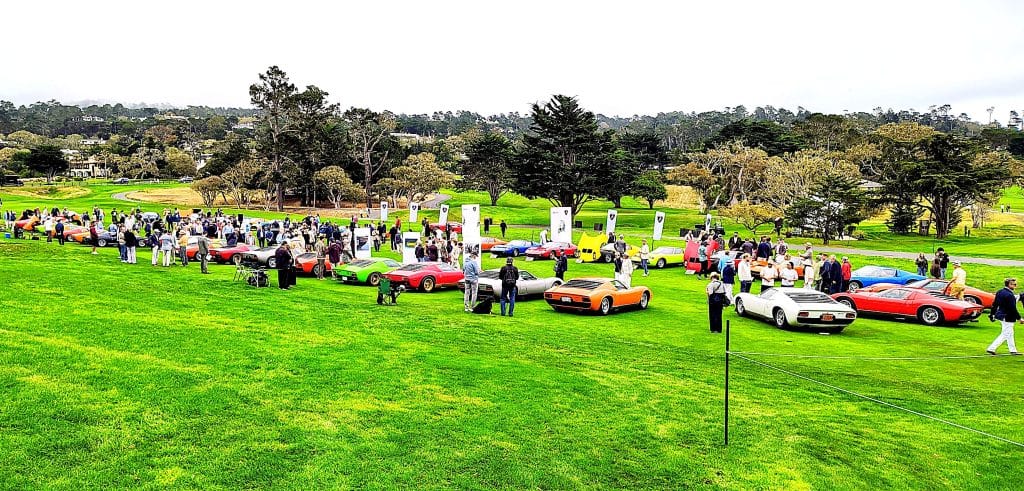
What began as a scheduled mid-morning interview with Lamborghini’s Federico Foschini turned into something even better: an unhurried, enthusiast-to-enthusiast conversation in the middle of the largest Miura gathering ever assembled – numbering 43 examples, on Pebble Beach’s 3rd fairway, for the model’s 60th anniversary. In the background, one of those Miuras was receiving its official Polo Storico certification. That moment anchors a closer look at Lamborghini’s heritage division: its four-pillar mission, a 25,000-hour reconstruction of a destroyed Countach prototype, and why a manufacturer’s serious investment in its own history matters more than ever as the collector generation ages.
By: David Neyens | Motorcopia
There is a particular kind of conversation that only happens amidst an unforgettable event like the Pebble Beach Concours d’Elegance. At this year’s edition, I had an interview slot scheduled mid-morning on Concours Sunday with top Lamborghini executive Federico Foschini, Lamborghini’s Chief Marketing & Sales Officer and a member of the company’s board of directors.
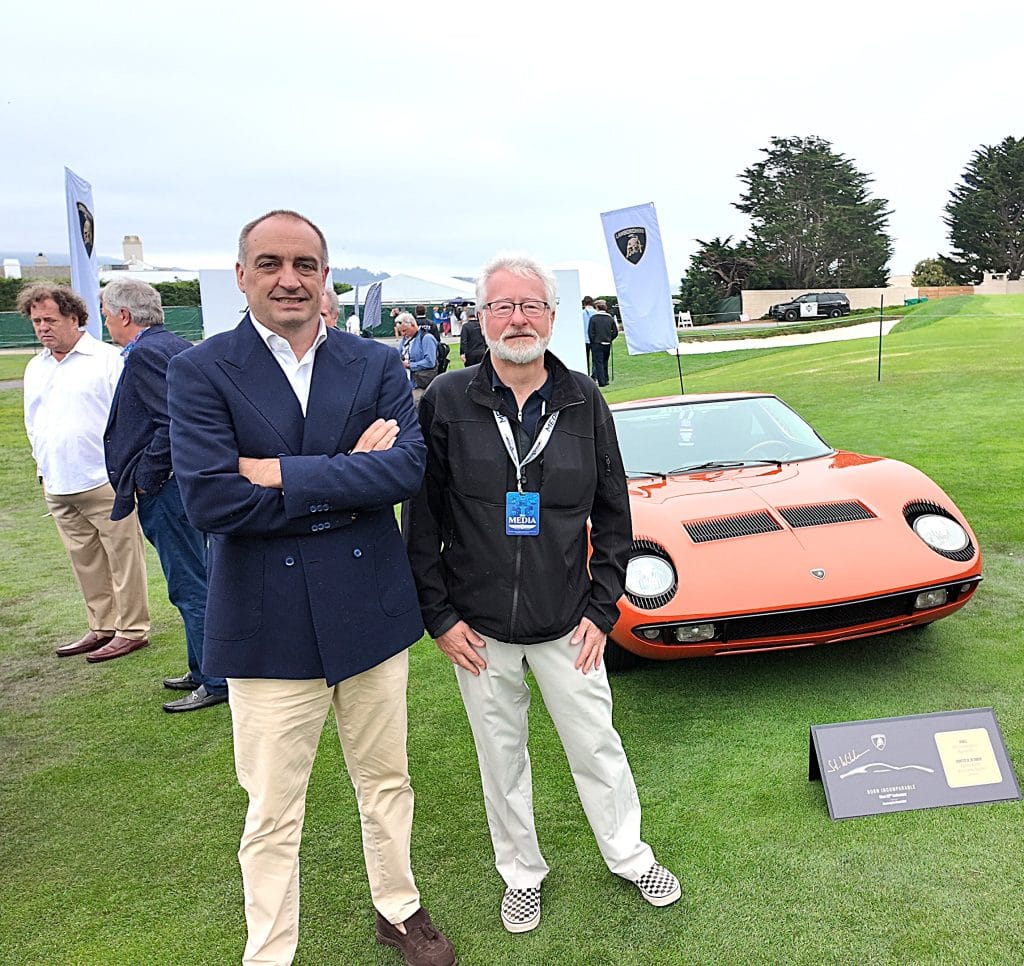
While a more formal interview was expected, what actually unfolded during my time with Mr. Foschini was more of an easy and most enjoyable discussion of our shared passion for all things Lamborghini – just two people who happen to love the same cars, standing in the middle of the largest gathering of Lamborghini Miuras – 43 of them – ever assembled, talking about what it all means.
That was the setting on August 16, 2026, when Federico and I were surrounded by 43 examples of the classic Lamborghini Miura that converged on the 3rd fairway at Pebble Beach Golf Links for the model’s landmark 60th anniversary celebrations. The number of Miuras on display set a new record and this gathering marked the first time this Pebble Beach fairway had ever been opened for a display of its kind.
During out time together, we discussed the Miura’s place in automotive and cultural history, and the particular kind of passion that Lamborghini owners seem to share regardless of which decade their car was built in. But one detail from that meeting stayed with me: while we talked, one of the Miuras on that fairway was receiving its official Lamborghini Polo Storico certification – a special moment happening in the middle of a large and very well-attended celebration.
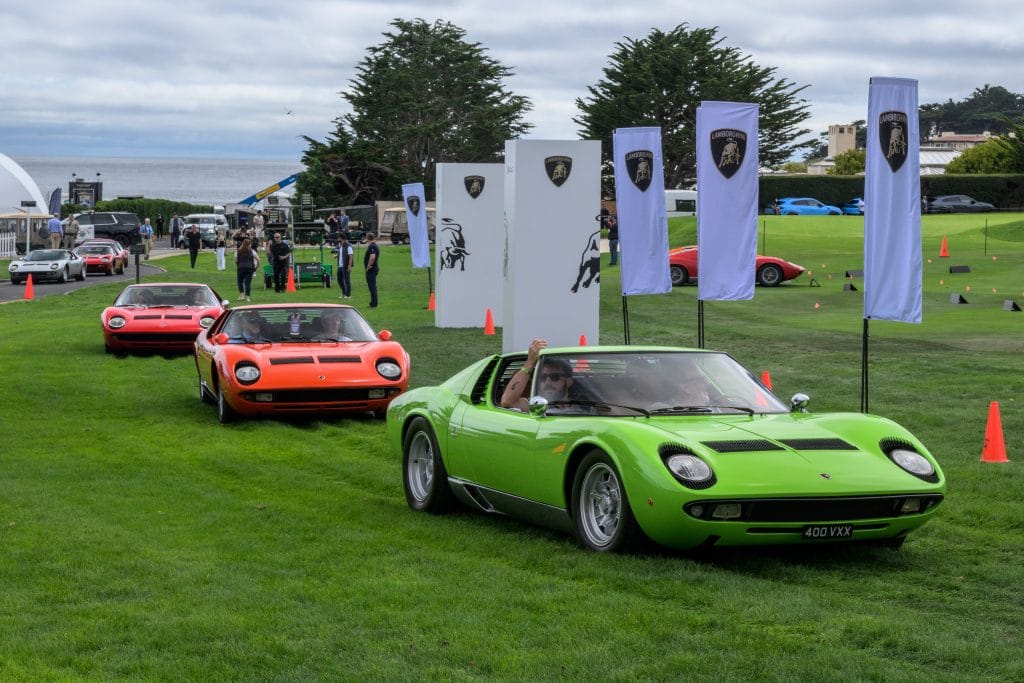
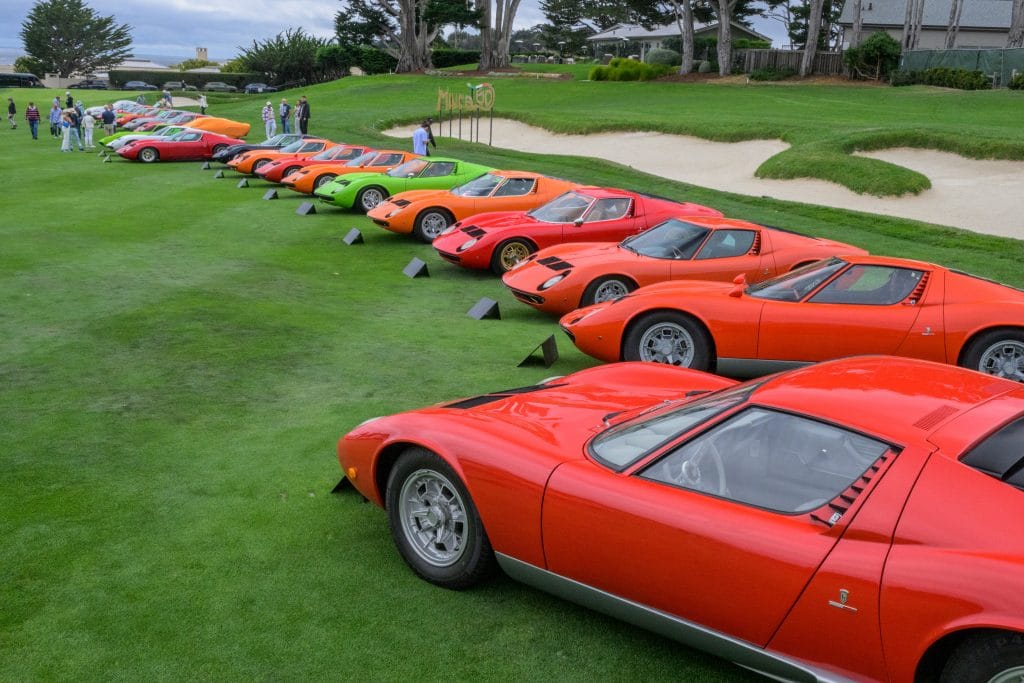
Images from the historic 60th Anniversary Miura Gathering, Copyright Kimball Studios/Pebble Beach Concours d’Elegance.
The Man Behind the Conversation
Federico Foschini has spent nearly 30 years at Lamborghini, having joined the company back in 1998 as an intern. He quickly moved through roles in purchasing, project management, sales leadership, and procurement before taking on his current role as Chief Marketing & Sales Officer in March 2021. Among the initiatives he has championed along the way is one that matters enormously to anyone who owns, restores, or simply admires a classic Lamborghini: the establishment of Polo Storico, the company’s Historical Center.
What Lamborghini Polo Storico Actually Does
Founded in 2015 in the company’s Sant’Agata Bolognese home, Lamborghini Polo Storico is the company’s official heritage division – the department responsible for archiving, restoring, certifying, and supplying original parts for every classic model from the 350 GT through the Diablo.
The work performed by Lamborghini Polo Storico breaks down into four areas. The Archive holds original sketches, production files, and technical drawings reaching back to the company’s earliest cars.
Certification provides an official Certificate of Authenticity, verifying whether or not a specific car’s components are genuine under the oversight of the Comitato dei Saggi – a panel of former Lamborghini employees whose firsthand knowledge of these cars cannot be replicated by any database.
Restoration work is performed using original methods and materials, often by the same kind of master craftsmen who actually built these cars the first time. And the Parts Program now covers more than 65 percent of the classic fleet, meaning owners of decades-old Lamborghinis can source components built to original specification, rather than settle for aftermarket approximations.
The results speak for themselves. In its first decade, Polo Storico completed more than 40 full restorations and over 200 authenticity certifications. Perhaps the most remarkable of these was the reconstruction of the 1971 Countach LP 500 prototype – a car destroyed decades earlier and rebuilt entirely from archival documents and photographs, a monumental project that consumed more than 25,000 hours of work. The restoration of Miura SV #5030, requiring 2,000 hours over 20 months, is another example of the level of commitment and depth involved.
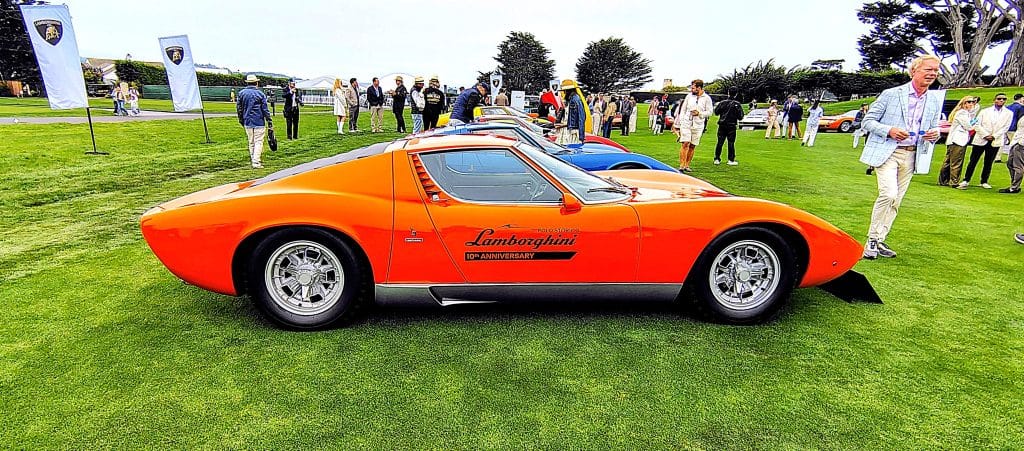
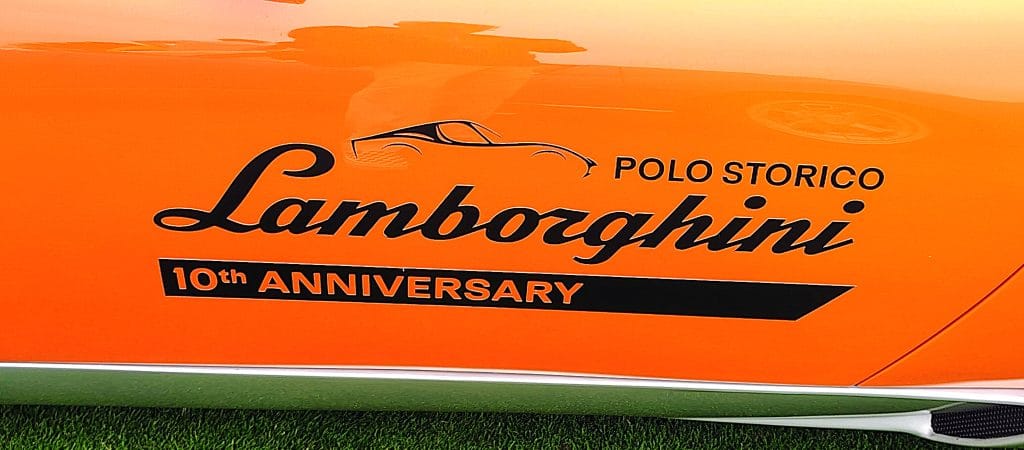
This Miura was exhibited by The Lamborghini Club USA. It carries door graphics celebrating the 10th Anniversary of Lamborghini Polo Storico’s establishment in 2015. Images: David C.R. Neyens | Motorcopia.
Why This Matters
What struck me most in talking with Mr. Foschini was not any single fact about the work that Lamborghini Polo Storico does, but the underlying commitment it represents. A manufacturer investing this seriously in the preservation of its own history – not as a simple marketing exercise, but as an ongoing institutional and brand-preservation priority – is not something every automotive marque can claim.
For owners of significant early Lamborghinis, and for the broader community of collectors and heirs who will increasingly find themselves stewarding these cars in the years ahead, that kind of institutional memory matters. It is the difference between a classic car with a paper trail and one with a real, verifiable history and staunch factory support behind it.
The Miura that received its Polo Storico certification that afternoon on the 3rd fairway of Pebble Beach will carry that verification for as long as it exists. Multiply that by the more than 200 certifications completed so far, and it becomes clear that Polo Storico is not a side project. It is Lamborghini’s answer to a question every heritage marque eventually has to face: who takes responsibility for a car’s history once the factory that built it has moved on to something new.
For a company as closely associated with dramatic forward motion as Lamborghini, spending a morning talking about the deliberate, patient work of looking backward was, in its own way, one of the most memorable conversations I had at the Pebble Beach Concours d’Elegance, and for that matter, during my time at Monterey Car Week.
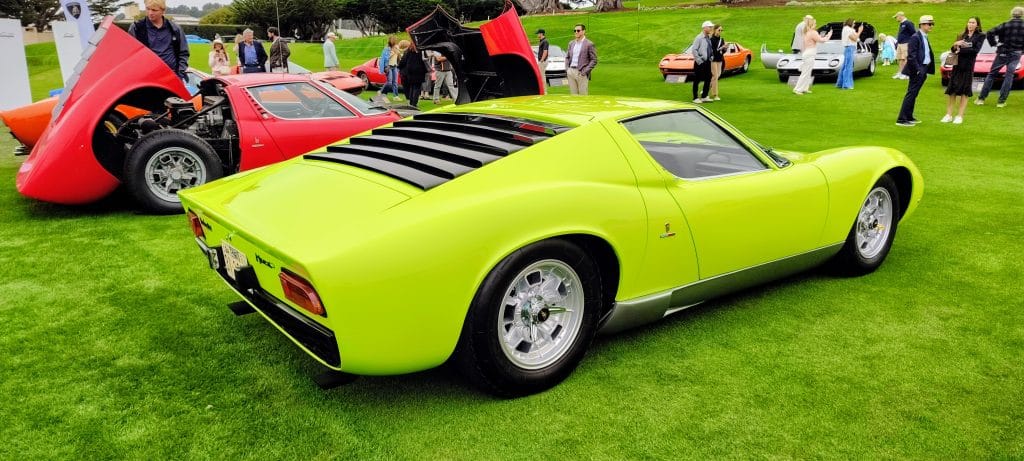
Rightly considered the world’s first “Supercar” with its V-12 powerplant, aggressive styling, and explosive performance, the Miura was produced in a stunning array of paint colors, making the 60th anniversary Miura gathering a feast for the senses. Image: David C.R. Neyens | Motorcopia
Note: Many thanks to to Jordan Russell, Senior Director of Extension PR, for literally “teeing” up the meeting with Mr. Foschini for me at Pebble Beach.
David C.R. Neyens | Motorcopia.com • © 2026 Motorcopia. All images, except where external credit is given, are by David C.R. Neyens | Motorcopia

Motorcopia | Collector Car Market Intelligence
Get the edge at www.motorcopia.com
Stay in the loop! Subscribe FREE to the Motorcopia Newsletter
Leave a Reply